Saturday, August 15, 2015

#ILookLikeASurgeon: An Ally's Perspective

By: Nancy Ho, PhD, RN, NP-C
@NancyHoPhD

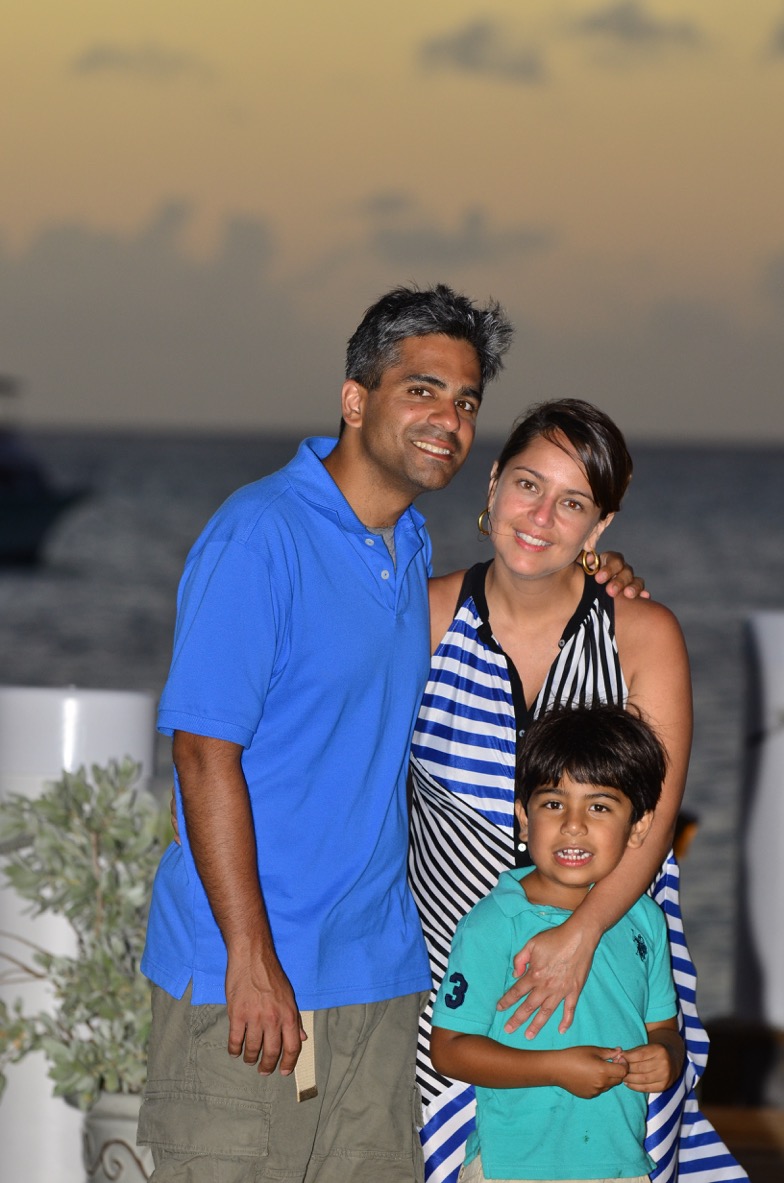
Although I am not a surgeon myself, I work closely with surgical residents on a surgical team. Thus, I have an idea of what the life of a surgeon looks like. This post is for those who want to be both surgeons and mothers. It’s also a post for those who want to support these amazing women. I don’t actually live the life and cannot truly understand. This is just the perspective of an ally. I wake up as early as they do, 4:30 am in order to be at the hospital by 5:30am to review charts and start rounding by 6am, but I only work half as much as they do. I can only imagine how hard it is.

I see the tough life decisions that come up and the sacrifices that people make to pursue their dreams of one day becoming a surgeon, and not just any surgeon, a female surgeon in a historically predominantly male profession. I watch women decline being a bridesmaid in a dear friend’s wedding, since she doesn’t know if she’ll have that weekend off. Attending the bridal shower and bachelorette party is not even an option, because that would just be too much time off. I see the internal struggles as family members, especially mothers, grandmothers, and aunties, nag female residents about getting married. She barely has enough time to eat, sleep, and shower. Getting out on the dating scene, with the hopes of finding a man who is not scared off by the fact that she is a well-accomplished woman, is a daunting task to incorporate into an already overbooked schedule.

I also see these women struggle as they try to fulfill their duties as a resident (80 hours a week, while rotating on nights, working 12 or 19 days in a row), while also being 8-9 months pregnant; that’s if they don’t go into pre-term labor. Meanwhile, their fellow colleagues frown upon the fact that she is pregnant during residency. Others intentionally take time off of residency completely, or disappear into the lab for several years, in order to add children to their family. People do this because as they get further in their training, they are also getting older and that dreaded biological clock just keeps on ticking.

But then what about parenting? Female residents generally do not get 3 months off for maternity leave. They get 4-6 weeks off, IF they are lucky. That leaves other people doing the childcare. This could be spouses, parents, in laws, and sometimes even family members living several states away. For those who can afford it, daycare and/or nannies are other possibilities. The price for this, however, is they go days to weeks without seeing their baby. They struggle with their identity as a mother since their baby doesn’t seem to recognize them or their four-year old cries for the nanny after they bruised their shin. This is just a small snap shot of what I see as I walk along side them through their training, while also building friendships along the way.

I’m pretty sure no one told them that these are the sacrifices that are necessary to survive in this field. We encourage our young women to aim high, but we never talk about the hardship and sacrifice that is to come. By the time one realizes it, it’s often too late to jump off the train. One oral and maxillofacial surgery resident said it best. Keep in mind that these surgeons not only go through medical school, but they also go through dental school. She said there are only a handful of jobs that will ever allow her to pay off her student loans. In a sense, she is now stuck on the surgeon train unless she is willing to commit financial suicide. It’s a tough predicament to be in. (Our society believes that student loan debt is good debt and thus, it’s okay to have a lot of it. I’d like to challenge that idea, but that’s another topic in and of itself.)

In terms of the big picture, I see two main solutions:

1)   Change the surgery culture.
2)   Be wise in who you choose to partner up with (AKA marry).

Changing the culture in surgery is going to take time. Since I’m not a surgeon, I don’t have a say in how to change surgery culture specifically, but I can speak to how we can change work culture in general. We should start by granting men paternity leave that is equal to maternity leave. This is not a new idea and a handful of companies in the United States are already doing this. If men and women both take similar amounts of time off from work, it levels out the playing field. We fear that women of child-bearing age will disappear once she has children. If men of child-bearing age (which is actually a much longer span of time) took the same amount of time off of work, it becomes less of an issue. Also, when men take paternity leave and participate in childcare early on, it sets the stage for the other 17+years of parenting. Men and women would be true partners in the parenting process. With men being just as involved as women, children may end up asking for their fathers just as much as their mothers. Additionally, either party will be just as effective in consoling a crying child. Granting men paternity leave, that is equal to maternity leave, is one huge step in the right direction.

Currently, what I see happening most is the second solution, mainly because it is going to take time for the culture to change. My word choice of “partner” in life is purposeful. These marriages really are partnerships. They do what works and do not ascribe to traditional gender roles. They take turns making career sacrifices and it’s never assumed that the woman stays at home to care for the children. Their marriages are strong and their spouses are either doing the majority of the childcare/housework or willing to outsource these things. Some will live simply on the surgery resident’s salary (I don’t know how, but I see them do it) and the spouse will stay at home to raise the kid(s). Others have a spouse who also works and they hire help. Even in these non-traditional marriages, every now and then, I still see a double standard pop up. Most people know that residents’ schedules are demanding and they will spend more time at work than they are at home. However, when the female resident is home, we sometimes expect her to contribute more at home than a male resident in the same situation. We need to watch out for this double standard, and we need to be aware of when it is self-imposed.


In the end, what they have going is not typical but necessary. The process often times feels lonely because few are talking about it. I see them come through, one at a time, and I hear their stories. At the same time, I wonder if they know each other’s stories. I’m glad there is a community of women surgeons out there supporting each other. It’s time to talk about these things. The time is now. For all those women out there doing it and living it, know that I am an ally and I support you. You are some of the most intelligent, strong, and inspirational women that I know. Hats off to you! #ILookLikeASurgeon

Friday, August 14, 2015

#ILookLikeASurgeon: We can do it!!!

Paula Ferrada, MD, FACS
@paulaferrada1


I truly believe the culture change in surgery and medicine needs to reach deeper, recognizing our humanity as a strength and not a weakness. Being human and complete is what makes us good doctors and what helps us relate to patients and their needs. Why, then,do we attempt to create environments in which being complete is impossible? Discrimination comes in many flavors, and gender is just one of them. Reading the blogs and watching all generations of surgeons come together on this amazing #ILoooklikeasuregon movement is inspiring and empowering.


Let’s not stop now, this is the time to create awareness, not only in surgery but in all of medicine!


Work-life balance is not gender specific. We, women and men, want it all. Happiness at work and happiness at home. This is really difficult to achieve if the system does not allow for flexibility. Denying the male gender involvement in raising children and participation in family dynamics is not realistic.


If you ask anybody to choose between life and work, who will chose work? Work is just a part of life, even when you are passionate about it, and these should not be mutually exclusive. This is one of the reasons why I profoundly disagree with the advice” if you wouldn’t rather be in the operating room (OR) that anywhere else then surgery is not for you”- we have to stop giving this unrealistic advice to our medical students. I’d rather be with my son when he is sick than in the OR and that does not make me less of a surgeon. Furthermore, many surgeons are researchers, writers, bloggers, leaders, and remain excellent at all that they do- they are not less capable because the OR is not their favorite place in the entire world.  


Creating environments so we can all reach our full potential is up to all of us. Daycare centers within hospitals, thoughtful scheduling tailored for individual needs and, most importantly, recognizing that wanting to have a balance is not a sign of weakness. These can be the start of revolutionizing how we act and how we are perceived as surgeons.


Discriminating instead of fostering our youth: I have been incredibly lucky to have mentors in my life who truly care about my wellbeing, and have helped me be a better surgeon clinically, cademically, and personally. But I also have been exposed to the other kind of “coach.”  Not giving credit for hard work.Taking credit for other’s work not only hinders professional growth, but feeds into the issues that we are facing, resulting in the slow disappearance of the academic surgeon. Mentorship should be about empowerment rather than secondary gain.


Patients may say or think “he or she is too young to be my surgeon,”but that thought goes away as soon as they realize what you can do. There is nothing like saving someone’s life to quickly change perceptions about the relationship between age and capability. Unfortunately the discrimination against being young comes from within our culture. Lack of wrinkles and grey hair does not always equal lack of expertise. Private and public bullying about being young should not be tolerated. We all, young and mature, bring something to the table when treating patients. Our patients know it, why don’t we?

Finally, in full disclosure, I have to say balance is something I still find challenging and is something I have to work on every day. I work 150% clinically with additional administrative responsibilities, my husband has a similar job and we have a five-year-old. My job is busy, my life hectic and imperfect, but I love it!!! True work-life integration requires a supportive professional environment that encourages and fosters human development. Let’s work together to harness the positive energy of #ILookLikeASurgeon and make this ideal a reality!


“Unless someone like you cares a whole awful lot,
Nothing is going to get better. It's not.”
― 
Dr. Seuss, The Lorax

Thursday, August 13, 2015

#ILookLikeASurgeon: The Hardest Part


by Chris Porter, MD
@PorterOnSurg


Watching the #ILookLikeASurgeon Twitter campaign has been a joy. I’ve long felt the old boys’ surgeon culture needed some shaking up.  (Facilitating cultural change was one of my goals in creating OnSurg.) May our new workplace culture recognize this: surgical practice was designed around men with few parenting obligations. That breed of surgeon is a rapidly-shrinking group. The growing demographic is female surgeons and new-age dads – people who parent.
Unlike most of the surgeon faces on #ILookLikeASurgeon, I’m privileged as it gets, race- and gender-wise. Even age-wise. Nobody calls me nurse or looks quizzical when I claim to be the surgeon. My scrub cap goes off to all who face workplace stereotype challenges. Being a surgeon is hard enough. Patients die who shouldn’t. You make mistakes you never imagined. You face questions you’re untrained to answer.
For me, the hardest part of being a surgeon though, is when the school nurse calls to say my daughter is sick while I’m up to my elbows in a patient’s belly. Sometimes a patient requires your full attention and you can’t give it.
In 2009, a colleague left our three-person practice. We struggled to replace her. I was getting worn out, but enjoyed being the go-to surgeon. My wife was also in a critical period of her career, so we outsourced parenting to a nanny. We could work day and night. I stayed late and routinely returned to the hospital for minor issues, on call or off. Long hours notwithstanding, work was the stable part of my life’s bigger picture.
My daughter was three when her mom and I separated. I rented the nearest apartment and left it unfurnished because I had no time and little idea how long I’d be there. We camped in sleeping bags and walked to the corner convenience store for bananas and cup-o-cereal. I set up a tent in the living room to complete the ruse of a planned adventure.
One morning I awoke anxious, well before my alarm, thinking about my upcoming operation. I took a long shower, rehearsing the steps of the abdominoperineal resection (APR) in my mind. My daughter woke up and, finding me absent from our nest, walked out the front door in search of me. My neighbor – a stranger to us – found my child, dressed only in flowered underwear, bawling in the parking lot. Early traffic whizzed by in the pitch darkness. The neighbor escorted my girl, lost, through the complex till they found a unit with a wide-open front door. I was still showering. The confusion and pain brought by our reunion rattled me. Concentrating for a five-hour APR was a challenge, and rationalizing the parenting guilt remains impossible today. Recalling that morning gives me nausea.
In 2011, during divorce proceedings and a cross-country move, I lived in hotels in Phoenix and commuted to Virginia for weeks at a time to secure a job. I worked surgical hospitalist shifts – sometimes five days straight – then flew back to a smelly extended-stay hotel for my week with my daughter. Family life was a fiasco. My girl grew accustomed to suitcase living and vending-machine meals. One morning I dropped her at school with Lunchables and no shoes. That night we splurged on a nice hotel with a pool. At 3 a.m., a fire alarm woke us and we marched outside. Police and fire trucks came, adding sirens and radio chatter to the clamor. My little girl twitched and yawned in my arms, and I stared into the pool hoping juvenile amnesia would erase this heartbreaking adventure in career and family.
After arriving in Virginia, my daughter and I were fully reeling from the break-up, the move, and separation from the nanny who’d been my daughter’s rock. I couldn’t fathom putting her in daycare, yet my nearest friends and family lived 2000 miles away. I quickly realized caring for a kindergartner half of every week would be impossible in most surgical practices. Even my modified hospitalist practice, with a clinic and an operating day, would get hit with the occasional snow day, knocking three patients off an overbooked schedule because I had to entertain a five-yr-old.
I opted to continue as a surgical hospitalist - a career move few had heard of, much less wanted on their mid-career résumé. I was grateful the option of being the nights-and-weekends surgeon even existed; the year prior it did not. Thankfully I can keep my career alive working the hours nobody wants.
A friend of mine wasn’t as lucky – she’d struggled as a new mom/new attending in a traditional academic practice which offered no scheduling flexibility. Then divorce left her caring for a toddler unassisted, ending her general surgery career just two years after completing training. What a loss for our community! What a cost to find a replacement. How sad, to have trained so many years for a dream that was realized for two fleeting years.
We can do better for ourselves and our patients. Our workplace is an anachronism, and the faces of #ILookLikeASurgeon reflect an energetic future of surgery. I love the spirit in this Twitter campaign. Let’s bring it to bear. Let’s celebrate diversity, break stereotypes, and advocate for real workplace change that make sense for our families, our lives, and our patients.

Chris Porter MD - general surgeon and founder of OnSurg.com

Wednesday, August 12, 2015

Humanizing the Profession: Patient perceptions of #ILookLikeASurgeon

by Terri Coutee @6state
Trends on Twitter and much of Social Media go at break neck speeds. Here today and gone tomorrow. There has been something trending on Twitter the past few days that inspired me to write this post. The trend followed the hash tag #ILookLikeASurgeon started by a resident in surgery, Heather Logghe, MD.  And yes, it exploded on Social Media!  Dr. Kathy Hughes, a surgeon and one of my favorite bloggers, even started a Facebook page to honor this community.  The movement was further inspired an article written about diversity and equality from a London surgeon, Dr. Ed Fitzgerald. I was mesmerized and actually found two surgeons I follow on Twitter who posted these two pictures.


I know Dr. Chrysopoulo personally and many of you who read my blog probably feel like you do, too, as I’m forever singing his praises. I had an excellent experience having him as my DIEP flap breast reconstruction surgeon. Dr. Karen Horton and I have chatted through Face book and Twitter and I have listened to a webinar she presented for Living Beyond Breast Cancer. She, too, is a well-respected microsurgeon who performs breast reconstruction surgery for cancer patients. She, like Dr. Chrysopoulo is one of the featured surgeons on my closed Face Book group offering extra time and consideration to questions posed by patients regarding topics on breast reconstruction. I looked for the other guest surgeons on my Face Book group to see if they had posted on #Ilooklikeasurgeon but have not found them yet. But, I do see their interest on Face book about their own family, fun, exercise, grilling, cooking, and what they do outside the operating room or theater as it is sometimes called.

Humanizing the Profession

Quite simply stated, this Twitter trend has humanized a profession that at times, is held to a standard that is difficult for even the humblest of individuals to live up to. What this trend shows are surgeons from a variety of practices from across the globe; women, men, single, married, with children, with their colleagues and yes, building human pyramids in the pool with their children or on the way home from a day in surgery. These surgeons go home at night like the rest of us and eat dinner, toss and turn in bed wondering about the complexities of life, brush their teeth, laugh, cry, wipe a child’s tear, hug a friend in need, run, weight lift, play the violin…. YES! They are human like the rest of us.  YES! They are diverse. They have a life outside of their scrubs.
I have a suspicion, unfounded and non-evidence based though it might be, and I will own it. My suspicion is this; the surgeons who have posted on this Twitter trend have high ratings with their patients. These are the surgeons who respect you as a team member in your health decisions, sometimes tagged as #SDM (shared decision making) on Twitter. These are surgeons who go the extra distance not only as team members with their colleagues but spend the extra time it takes to research evidence based medicine (#EBM) to hone their practice and skill achieving the best in patient outcomes.
So humanize your surgeon. Respect begets respect. Let down your fear of their vast amount of knowledge, years of training, and skill. Know that these women and men chose this profession because they recognized a passion, a skill in wanting to help you. There is a person behind every mask!

Terri Coutee is a breast cancer survivor and patient advocate for all choice of breast reconstruction. This post is cross-posted at Terri's blog: DiepC Journey: Reconstructing a purposeful life

Tuesday, August 11, 2015

What does #ILookLikeASurgeon really say about surgeons around the world? A Call to Action

Ed Fitzgerald

Sitting in London on Friday afternoon, I was intrigued to see the first #ILookLikeASurgeon tweet from Heather Logghe, a call-to-arms which rapidly opened up a floodgate of international support.

Diversity and equality in surgery has long been a thorny issue on both sides of the Atlantic and beyond. In England, I previously wrote a paper reporting that over half of male and two-thirds of female newly graduated doctors did not think surgery welcomed women, so I was interested to see what the response would be to this Twitter campaign. I don’t think anyone could have imagined the strength of support in the 48 hours that followed.

To put this in an English context, recent figures indicate that only 11% of the consultant (attending) surgical workforce is female, ranging from 21.5% of pediatric surgeons to 4% of cardiothoracic surgeons. As recently as 2000, women made up just 5.9% of the surgical workforce, so while the situation has improved, surgery has a problem. Dig a little deeper into these figures and generational differences start to shed greater light on the current debate, with 30% of surgical trainees now female. Their voice was clear and loud enough to be heard this weekend: society is moving on, and surgery risks being left behind.

Such deep-seated cultural issues are little surprise here when the wider role of women in medicine faces outmoded opinions from within, guaranteed to provoke a visceral response from any reasonable reader.

So what have we learnt from the overwhelming success of this weekend’s hashtag trend? On a personal, professional and societal level, I’d suggest we’ve learnt a great deal.

Heather’s original blog began with the tagline ‘Be the role model you always wanted but never had’. On a personal level, the community rising through Twitter this weekend demonstrated the breadth of outstanding role models that already exist among us, but that many never knew. When social media can unite this globally, we are all stronger. It was humbling to see the pride in these pictures, and I hope that those tweeting in support realize that they themselves become the role models that will inspire others with their achievements to-date.

Yet on a professional level, this was always about far more than simply shattering stereotypes and finding role models. The frustration of many women in surgery found a long-overdue vent this weekend. From pre-filled operation reports always wrongly titled ‘Mr’, to repeatedly being told ‘you don’t look like a surgeon’ or ‘you'll never get it’, this celebration of diversity carried a cathartic edge. The rapidly accelerating momentum was testament to this. Everyone encounters stereotypes, but would this have gained the same traction if equality of opportunity and acceptance of diversity wasn’t at the heart of this?

At a societal level, what did onlookers see? #ILookLikeASurgeon received over 15 million impressions on Twitter and over 6,000 tweets, numbers which are surely set to rise. They saw surgeons in scrubs, but many more will have seen female surgeons as family members and mothers. As a society, we were reminded that whatever challenges it takes a man to reach the pinnacle of his profession, at best a woman in the same place will have balanced family, childcare and more. At worst, she will have felt it necessary to sacrifice these for career advancement. Is this really societal progress? Do we accommodate this, or even openly recognize this in surgery yet? Again, if the answer was yes, would this have hashtag have gained such traction?

At the start of this weekend we were all challenged to tweet #ILookLikeASurgeon and own it. Across the globe, thousands did. From Mexico to Saudi Arabia, Australia to Colombia, Pakistan to Spain, international support and selfies flowed in.

At the end of the weekend it’s now vital we ask other groups to ‘own it’. We can’t change the world with a hashtag, but this is where it starts. Smashing stereotypes, promoting diversity, and challenging cultures needs support from those that have the power to influence entire professions. How will the American College of Surgeons now step-up to address these issues? What leadership will the Royal College of Surgeons of England, with its first ever female president in 214-years, now provide?

For the sake of all those who stood up this weekend and said #ILookLikeASurgeon, it’s time to listen. Around the world, they told us that opportunity and equality is not yet achieved. For the sake of our patients, our profession, and our wider society, it’s time to give these issues the attention they deserve and tackle them head-on. How will you help?


And Heather says, keep tweeting! This movement is for all of us. We all need to own it and #CelebrateDiversity. Take the lead from Dr. Brendon Stiles and post your pic in solidarity of diverse surgeons around the world!


Friday, August 7, 2015

#ILookLikeASurgeon Tweet it. Own it.

Be the role model you always wanted but never had.

A couple weeks ago saw this inspiring Steel Heels article "Healing with Steel" on Dr. Nikki Stamp, a cardiothoracic surgeon in Australia, and the #ThisIsWhatWeLookLike campaign.
Dr. Nikki Stamp

Fast forward to a text message from my friend and co-resident, Dr. Sara Scarlet.


I logged onto Twitter and saw the #ILookLikeAnEngineer campaign. One tweet and an emphatic response from Dr. Alison McCoubrey in the UK opened a floodgate of support from the #SurgTweeting community.


The photos are stunning:

I like the hashtag in the first person. As women surgeons, whether we are in our first year of training or an emeritus professor, it's most important that we ourselves believe we "look" like surgeons. Because we do.


T shirts can be purchased here.


Owning it,  


Addendum: Here is the story of Isis Anchalee, the women behind the movement, in her own words. Thank you for your courage Isis. You changed the world.
Isis Anchalee

In other news, Dr. Scarlet, who was busy operating and being a surgeon all night, finally had time to post her own selfie:


@ColumbiaSurgery responded with this powerful collage:


Dr. Stamp posted a powerful response in support of the #ThisIsWhatILookLike and #ILookLikeASurgeon campaigns:

"I want to share that you absolutely do not have to be a certain race, gender, personality, sports fan or other group to be a surgeon. In fact, diversifying our specialty to involve women, for example, is a fantastic thing. Every different person has something unique to bring to the table and we should encourage that enrichment. And finally, I want to show the world that I don’t have to be a stereotype to be a surgeon. Because I am a surgeon and this is what I look like."


Amazing blogs keep coming!

New blog by Dr. Alison McCourbrey, the first female general surgeon at her hospital in Northern Ireland.

She writes, "It’s been amazing to see so many inspirational women pulling together & supporting this campaign & each other. I am so happy to be a part of this, promoting positive role models and changing perceptions of women in male-dominated professions. I hope that this might encourage more women to join a career path that i love and feel privileged to do. Defy the stereotype & be part of the solution!

#ILookLikeaSurgeon because I am a surgeon."


To see all the inspiring pics, 
check out the Storify 
compiled by future surgeon Jasmine Miller.