Friday, August 21, 2015

#ILookLikeASurgeon 101: How to Be an Advocate for Surgical Workforce Diversity


Photo Credit

Marissa Boeck MD, MPH

Like many before and others who persist, I held out on speaking up about workforce gender inequalities. Despite repeated examples in my job as a female general surgery resident, I only paid vague attention to the equity campaigns that appeared in my Twitter feed, had minimal interactions with surgical society outreach programs for female surgical residents, and sporadically read news commentary on continued gender disparities in promotion and pay across industries. Through silence it would appear I was accepting circumstances as they were. I viewed Lean In, its rebuttal, and the #ThisIsWhatWeLookLike campaign from afar. It wasn’t that these issues didn’t resonate with me, but I simply didn’t have the time to participate. Surgical residency, make that a surgical career in general, remains incredibly demanding. This is despite 80-hour workweeks, still the equivalent of two full-time jobs in most fields, and an alleged recognition of the importance of work-life integration. Yet as a general surgery resident, adhering to a regular self-care regimen of sleep and food was challenging enough, without the added task of advocacy.

That is, until now. With research years affording a semblance of normalcy, combined with a Twitter-engaged female surgeon research mentor, I stumbled upon a movement at its inception. But it wasn’t only circumstance that pushed me to join; this somehow seemed different. A simple phrase, #ILookLikeASurgeon, captured a well acknowledged yet all-to-often marginalized inequality, culminating in a voice that was at last loud enough to be heard. Initially built on gender biases in surgery, the hashtag has evolved to represent the lofty aim of dispelling all stereotypes, arguing that physical traits do not equate with intellect, skill, or capability.

Borrowing a phrase from a well-known female surgeon role model Dr. Julie Freischlag, we now need “active transport” to disseminate and implement the #ILookLikeASurgeon principles, which will ideally become the new normal. As indirectly proven by the campaign’s popularity, the historic method of passive recognition is not enough, inadvertently propagating and perhaps even reinforcing the issues. Yet as others have pointed out, self-photographs of surgeons alone are also unlikely to lead to increased surgical leadership diversity, a more accepting work environment, or equality of pay. However, the five words of #ILookLikeASurgeon have hit a nerve, spawning an awe-inspiring global community of passionate individuals who together want to challenge the status quo, and truly alter the culture of surgery for the better.

Here are some ways to become a part of this extraordinary effort:

1. Join your Social Media (SoMe) platform of choice – or why not all of them? -  and post a picture!
Although born on Twitter, #ILookLikeASurgeon has expanded to include Facebook, Instagram, LinkedIn, and undoubtedly other platforms flying beneath the radar. Getting on SoMe is fairly simple:
1.     Sign up for an account (Twitter 101)
2.     Post a picture of yourself doing an activity of your choosing, showcasing that surgeons can and do look like anyone, making sure to use the #ILookLikeASurgeon hashtag. Other complimentary ones include: #ChallengeStereotypes, #DiversityMatters, #CelebrateDiversity, #BeTheChange, #HumanizeTheProfession…or make one yourself!
3.     Consider the judicious use of emoticons for further emphasis and effective use of limited space
4.     Like, retweet, and/or comment on posts from other community and organization members, showing camaraderie, engagement, and interest, which will hopefully encourage future posts
5.    For Twitter specifically, become savvy by following @Support and @TweetSmarter
6.     Start building a virtual community of engaged, passionate individuals, who you’ll likely cross paths with one day #IRL (in real life).
7.     Think about with whom the #ILookLikeASurgeon message will resonate most, and reach out! That’s the great thing about SoMe, former and current U.S. presidents to large organizations and celebrities are just a click, like, comment, or 140 characters away.

2. Encourage others to join the conversation – or as I like to refer to it: #PositivePeerPressure.
There are many within our surgical community who continue to resist the true power of SoMe. If breaking geographical and hierarchal barriers isn’t convincing enough, here are a couple of recent articles to persuade them to hop aboard the #SurgTweeting train:
1.     A recent blog post on KevinMD highlighting the need for SoMe in academic medicine
2.     Twitter 101

3. Share your perspective, experiences, and suggestions for change via a blog, editorial, op-ed, or letter to the editor.
Numerous inspiring, impassioned, genuine pieces have already been written, as many felt compelled to speak out as #ILookLikeASurgeon gained momentum. Yet there are undoubtedly more stories to be told, with words capable of powerfully capturing past and current struggles to inform the most needed future interventions. More importantly, these words have a truly global reach, serving as a missing message of encouragement or hope for those lacking local surgical mentors.

4. Website creation and development
Currently in the development phase, visit ILookLikeASurgeon.org to sign up for site launch notifications. And if you are a tech guru, or even just a little tech savvy, we’d love your help!

5. Participate in events at the various meetings – or organize one yourself!
Planning for #ILookLikeASurgeon activities at the American College of Surgeons Clinical Congress 2015 is currently underway. Given the global response and interest, there’s no reason why #ILookLikeASurgeon events shouldn’t pop up around the world. Post on SoMe to gather local interest, reach out to societies and organizations in your country, and make the virtual tangible with real-life meet-ups. Not only does this create an environment for mentorship and solidarity, but also will generate discussions of local surgical workforce challenges and issues, laying the foundation for relevant, actionable targets for change.

6. Join the growing team behind #ILookLikeASurgeon, which welcomes your input and ideas for development and implementation of next steps
Everyone who posts on a SoMe platform is truly a part of #ILookLikeASurgeon. As the community grows from one to thousands, there is an emerging need for increased member involvement in order to transition from a virtual groundswell to concrete interventions. Please reach out if interested, including with ideas, partnerships or funding suggestions. Individuals from all levels of training are welcome!


“If we could change ourselves, the tendencies in the world would also change. As a man changes his own nature, so does the attitude of the world change towards him...We need not wait to see what others do.” –Mahatma Gandhi


Marissa Boeck MD, MPH @KickAsana

Post-Graduate Fellow in Global Health, 
Northwestern University Feinberg School of Medicine
Arthur Tracy Cabot Fellow, 
Harvard Center for Surgery and Public Health, 
Brigham and Women’s Hospital
General Surgery Resident, 
New York Presbyterian Hospital – Columbia

Wednesday, August 19, 2015

I Look Like a Surgeon, and #ILookLikeASurgeon

“A good surgeon has the eye of an eagle, the heart of a lion, and the hand of a woman…”– 15th Century English Proverb
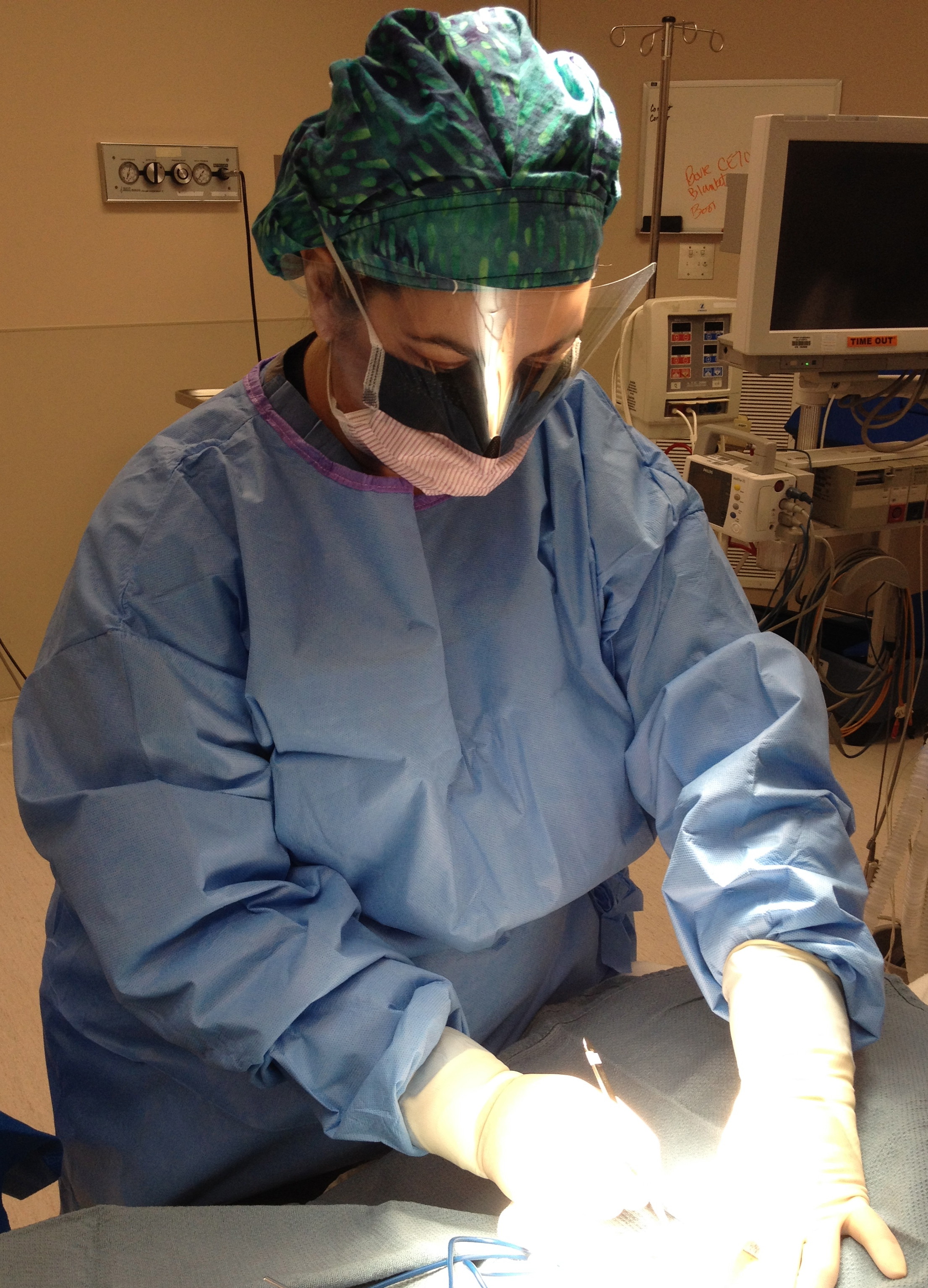
IMG_1152
#ILookLikeASurgeon, operating
Kathryn Hughes, MD
@DrKathyHughes

#ILookLikeASurgeon, a new hashtag on Twitter and the movement it has inspired, has resonated deeply with me.
I look like a Surgeon. There is so much more behind this seemingly simple statement of fact. I am not just stating that I have excelled and I have achieved and I am accomplished by being a surgeon. In saying I look like a surgeon, I am saying that it is normal for me to be a surgeon; that it is normal for me to be seen as a surgeon; that it is normal for me to command the respect and authority of a surgeon; and ultimately, that it is normal for others who look like me to aspire to be surgeons.
I look like a Woman. And in that statement, in the moment I am visualized, there is an instantaneous assessment, judgement, and conclusion about who I am and what I am capable of. Even more importantly, about what I am not capable of. It dictates where I can go, what I can wear, what I can say, and even how I say it, especially if I value personal safety.
With the genesis and appearance of the hashtag #ILookLikeASurgeon, I have felt an overwhelming sense of connection and community, validation and gratitude. #ILookLikeASurgeon has spread across Twitter and the Internet, crossing continents and spanning the globe.#ILookLikeASurgeon has inspired surgeons and others, and is garnering the attention and support of media outlets, our medical and surgical organizations, and our healthcare institutions.
Yet this very public, open, and global movement has affected me in a very personal way, touching me at my very core.#ILookLikeASurgeon represents many things to me. It says “I am here,” “See me.” It is me claiming my profession, the profession that I and all surgeons work and sacrifice so very hard to attain and maintain. Finally, as a physician and especially as a surgeon, my profession is not merely a job or a career, but a fundamental part of who I am. No matter where I may go or what I may do, being a physician and being a surgeon is part of who I am. In a very palpable and real way for me, with #ILookLikeASurgeon I am claiming myself as well; this is me.
To many people (too many people), the same individual who declares “I am a Surgeon” can not be the same individual who says “I am a Woman.” #ILookLikeASurgeon challenges that. There is a fairly well-known riddle, a real brain-teaser, that continues to stump people. It goes:  A father and son were out driving in a car on a stormy night, and were involved in a serious accident. The father was killed instantly, and the seriously injured boy was brought to the hospital, in need of emergency surgery. The surgeon entered the room, took one look at the young patient, and declared, “I cannot operate on this boy. He is my son.” From here, the listener must figure out why the surgeon can’t operate. This riddle is not new; it was not new when I first heard it nearly 40 years ago. Yet it remains quite the stumper to this day. (And I will let you, dear reader, work it out for yourself if you haven’t already heard it before). The passion and the point behind #ILookLikeASurgeon seeks to turn the brain-teaser into a no-brainer.
#ILookLikeASurgeon speaks to diversity extending beyond gender, and that too is powerful. But for women, who make up more that half of the world around us, more than half of college and medical students, it shows that we are also present in this space traditionally dominated by men, alongside them. It calls on us to normalize diversity, even as we strive to normalize the numbers to reflect the world around us. It calls on us to appreciate that our differences are only different, not better or worse.
American College of Surgeons President, Andy Warshaw, MD, FACS was quoted in a Tweet, saying, “We all look alike in the O.R.; It’s quality, not gender, that counts.” #ILookLikeASurgeon and the community and momentum it has inspired gives me hope that both in and out of the O.R. we will be seen as Surgeons, and that our work and not our gender will speak for us.

This blog appeared originally on Dr. Hughes' blog, Behind the Mask
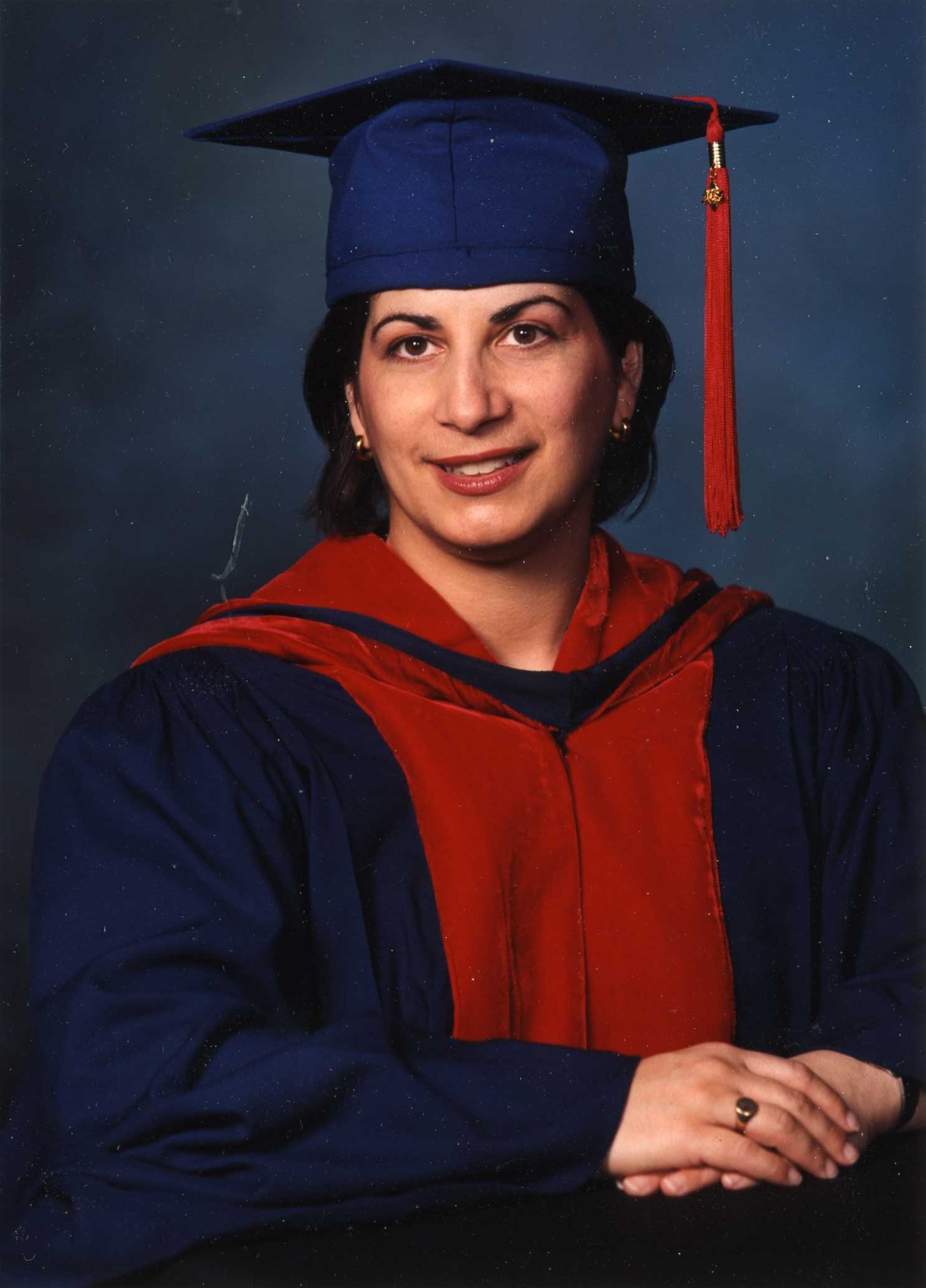
IMG_0910
Newly inducted Fellow of the American College of Surgeons


Saturday, August 15, 2015

#ILookLikeASurgeon: An Ally's Perspective

By: Nancy Ho, PhD, RN, NP-C
@NancyHoPhD

Although I am not a surgeon myself, I work closely with surgical residents on a surgical team. Thus, I have an idea of what the life of a surgeon looks like. This post is for those who want to be both surgeons and mothers. It’s also a post for those who want to support these amazing women. I don’t actually live the life and cannot truly understand. This is just the perspective of an ally. I wake up as early as they do, 4:30 am in order to be at the hospital by 5:30am to review charts and start rounding by 6am, but I only work half as much as they do. I can only imagine how hard it is.

I see the tough life decisions that come up and the sacrifices that people make to pursue their dreams of one day becoming a surgeon, and not just any surgeon, a female surgeon in a historically predominantly male profession. I watch women decline being a bridesmaid in a dear friend’s wedding, since she doesn’t know if she’ll have that weekend off. Attending the bridal shower and bachelorette party is not even an option, because that would just be too much time off. I see the internal struggles as family members, especially mothers, grandmothers, and aunties, nag female residents about getting married. She barely has enough time to eat, sleep, and shower. Getting out on the dating scene, with the hopes of finding a man who is not scared off by the fact that she is a well-accomplished woman, is a daunting task to incorporate into an already overbooked schedule.

I also see these women struggle as they try to fulfill their duties as a resident (80 hours a week, while rotating on nights, working 12 or 19 days in a row), while also being 8-9 months pregnant; that’s if they don’t go into pre-term labor. Meanwhile, their fellow colleagues frown upon the fact that she is pregnant during residency. Others intentionally take time off of residency completely, or disappear into the lab for several years, in order to add children to their family. People do this because as they get further in their training, they are also getting older and that dreaded biological clock just keeps on ticking.

But then what about parenting? Female residents generally do not get 3 months off for maternity leave. They get 4-6 weeks off, IF they are lucky. That leaves other people doing the childcare. This could be spouses, parents, in laws, and sometimes even family members living several states away. For those who can afford it, daycare and/or nannies are other possibilities. The price for this, however, is they go days to weeks without seeing their baby. They struggle with their identity as a mother since their baby doesn’t seem to recognize them or their four-year old cries for the nanny after they bruised their shin. This is just a small snap shot of what I see as I walk along side them through their training, while also building friendships along the way.

I’m pretty sure no one told them that these are the sacrifices that are necessary to survive in this field. We encourage our young women to aim high, but we never talk about the hardship and sacrifice that is to come. By the time one realizes it, it’s often too late to jump off the train. One oral and maxillofacial surgery resident said it best. Keep in mind that these surgeons not only go through medical school, but they also go through dental school. She said there are only a handful of jobs that will ever allow her to pay off her student loans. In a sense, she is now stuck on the surgeon train unless she is willing to commit financial suicide. It’s a tough predicament to be in. (Our society believes that student loan debt is good debt and thus, it’s okay to have a lot of it. I’d like to challenge that idea, but that’s another topic in and of itself.)

In terms of the big picture, I see two main solutions:

1)   Change the surgery culture.
2)   Be wise in who you choose to partner up with (AKA marry).

Changing the culture in surgery is going to take time. Since I’m not a surgeon, I don’t have a say in how to change surgery culture specifically, but I can speak to how we can change work culture in general. We should start by granting men paternity leave that is equal to maternity leave. This is not a new idea and a handful of companies in the United States are already doing this. If men and women both take similar amounts of time off from work, it levels out the playing field. We fear that women of child-bearing age will disappear once she has children. If men of child-bearing age (which is actually a much longer span of time) took the same amount of time off of work, it becomes less of an issue. Also, when men take paternity leave and participate in childcare early on, it sets the stage for the other 17+years of parenting. Men and women would be true partners in the parenting process. With men being just as involved as women, children may end up asking for their fathers just as much as their mothers. Additionally, either party will be just as effective in consoling a crying child. Granting men paternity leave, that is equal to maternity leave, is one huge step in the right direction.

Currently, what I see happening most is the second solution, mainly because it is going to take time for the culture to change. My word choice of “partner” in life is purposeful. These marriages really are partnerships. They do what works and do not ascribe to traditional gender roles. They take turns making career sacrifices and it’s never assumed that the woman stays at home to care for the children. Their marriages are strong and their spouses are either doing the majority of the childcare/housework or willing to outsource these things. Some will live simply on the surgery resident’s salary (I don’t know how, but I see them do it) and the spouse will stay at home to raise the kid(s). Others have a spouse who also works and they hire help. Even in these non-traditional marriages, every now and then, I still see a double standard pop up. Most people know that residents’ schedules are demanding and they will spend more time at work than they are at home. However, when the female resident is home, we sometimes expect her to contribute more at home than a male resident in the same situation. We need to watch out for this double standard, and we need to be aware of when it is self-imposed.


In the end, what they have going is not typical but necessary. The process often times feels lonely because few are talking about it. I see them come through, one at a time, and I hear their stories. At the same time, I wonder if they know each other’s stories. I’m glad there is a community of women surgeons out there supporting each other. It’s time to talk about these things. The time is now. For all those women out there doing it and living it, know that I am an ally and I support you. You are some of the most intelligent, strong, and inspirational women that I know. Hats off to you! #ILookLikeASurgeon

Friday, August 14, 2015

#ILookLikeASurgeon: We can do it!!!

Paula Ferrada, MD, FACS
@paulaferrada1


I truly believe the culture change in surgery and medicine needs to reach deeper, recognizing our humanity as a strength and not a weakness. Being human and complete is what makes us good doctors and what helps us relate to patients and their needs. Why, then,do we attempt to create environments in which being complete is impossible? Discrimination comes in many flavors, and gender is just one of them. Reading the blogs and watching all generations of surgeons come together on this amazing #ILoooklikeasuregon movement is inspiring and empowering.


Let’s not stop now, this is the time to create awareness, not only in surgery but in all of medicine!


Work-life balance is not gender specific. We, women and men, want it all. Happiness at work and happiness at home. This is really difficult to achieve if the system does not allow for flexibility. Denying the male gender involvement in raising children and participation in family dynamics is not realistic.


If you ask anybody to choose between life and work, who will chose work? Work is just a part of life, even when you are passionate about it, and these should not be mutually exclusive. This is one of the reasons why I profoundly disagree with the advice” if you wouldn’t rather be in the operating room (OR) that anywhere else then surgery is not for you”- we have to stop giving this unrealistic advice to our medical students. I’d rather be with my son when he is sick than in the OR and that does not make me less of a surgeon. Furthermore, many surgeons are researchers, writers, bloggers, leaders, and remain excellent at all that they do- they are not less capable because the OR is not their favorite place in the entire world.  


Creating environments so we can all reach our full potential is up to all of us. Daycare centers within hospitals, thoughtful scheduling tailored for individual needs and, most importantly, recognizing that wanting to have a balance is not a sign of weakness. These can be the start of revolutionizing how we act and how we are perceived as surgeons.


Discriminating instead of fostering our youth: I have been incredibly lucky to have mentors in my life who truly care about my wellbeing, and have helped me be a better surgeon clinically, cademically, and personally. But I also have been exposed to the other kind of “coach.”  Not giving credit for hard work.Taking credit for other’s work not only hinders professional growth, but feeds into the issues that we are facing, resulting in the slow disappearance of the academic surgeon. Mentorship should be about empowerment rather than secondary gain.


Patients may say or think “he or she is too young to be my surgeon,”but that thought goes away as soon as they realize what you can do. There is nothing like saving someone’s life to quickly change perceptions about the relationship between age and capability. Unfortunately the discrimination against being young comes from within our culture. Lack of wrinkles and grey hair does not always equal lack of expertise. Private and public bullying about being young should not be tolerated. We all, young and mature, bring something to the table when treating patients. Our patients know it, why don’t we?

Finally, in full disclosure, I have to say balance is something I still find challenging and is something I have to work on every day. I work 150% clinically with additional administrative responsibilities, my husband has a similar job and we have a five-year-old. My job is busy, my life hectic and imperfect, but I love it!!! True work-life integration requires a supportive professional environment that encourages and fosters human development. Let’s work together to harness the positive energy of #ILookLikeASurgeon and make this ideal a reality!


“Unless someone like you cares a whole awful lot,
Nothing is going to get better. It's not.”
― 
Dr. SeussThe Lorax